


A custodial wallet is one where a third party, usually an exchange like Coinbase or Binance, holds your private keys and controls your crypto or NFTs on your behalf, similar to how a bank holds your money. A non-custodial wallet, such as MetaMask or a hardware wallet like a Ledger, gives you sole control of your private keys, with no company able to freeze, reverse, or lose access to your funds except through your own mistake. Custodial wallets are easier for beginners since there is no seed phrase to manage and support exists if something goes wrong, but your assets depend on that company staying solvent and honest, a risk the FTX collapse made clear. Non-custodial wallets remove that counterparty risk entirely, but if you lose your seed phrase, no one can recover it for you. For holding or trading NFTs long term, most experienced collectors use a non-custodial wallet.
Anyone buying their first NFT eventually runs into this choice, often without realizing it. Sign up on an exchange and buy crypto there, and you are usually handed a custodial wallet by default. Install MetaMask or plug in a hardware device, and you are managing a non-custodial one. The difference sounds technical, but it determines who actually controls your assets and what happens if something goes wrong.

What a custodial wallet actually is
A custodial wallet is managed by a third party on your behalf. When you buy Bitcoin on Coinbase or Ethereum on Binance and leave it sitting in your exchange account, you don’t hold the private key for that wallet. The exchange does. Your account balance is really just a ledger entry the company maintains, backed by crypto the exchange holds in its own wallets.
This arrangement has real advantages. There’s no seed phrase to write down or lose. If you forget your password, you can reset it through normal account recovery, the same way you would with email. Customer support exists if a transaction goes wrong. For someone just getting comfortable with crypto, that safety net matters.
The tradeoff is counterparty risk. You are trusting the exchange to stay solvent, keep proper reserves, and not misuse customer funds. Most of the time that trust is fine. Sometimes it isn’t.
What a non-custodial wallet actually is
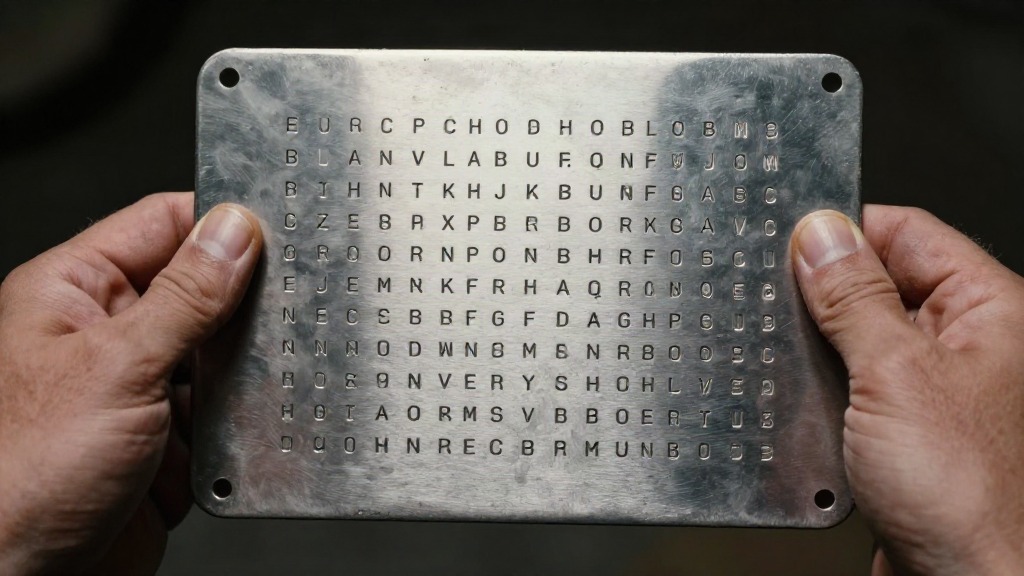
A non-custodial wallet puts the private key, and therefore full control, in your own hands. MetaMask, Trust Wallet, Rainbow, and hardware devices like Ledger or Trezor all work this way. When you create one, you’re given a seed phrase, usually 12 or 24 words, that mathematically generates your private keys. Whoever holds that phrase controls the wallet, permanently and irreversibly.
This is the model you need for NFTs in practice, since marketplaces like OpenSea and Magic Eden connect directly to a non-custodial wallet rather than holding your tokens for you (see our guide on how to set up a MetaMask wallet if you’re starting from zero). No company sits between you and your assets. Nobody can freeze your wallet, reverse a transaction, or go bankrupt and take your NFTs down with them.
The cost of that independence is that you are now your own bank. There is no password reset. If you lose your seed phrase and your device, your funds are gone, not held by anyone, just permanently inaccessible on the blockchain. We cover what that looks like in detail in what happens if you lose access to your NFT wallet.
Why the difference matters: FTX and Mt. Gox
This isn’t a theoretical distinction. Two of the largest failures in crypto history happened because customers trusted a custodian that didn’t deserve it.
FTX, once one of the largest cryptocurrency exchanges in the world, filed for Chapter 11 bankruptcy on November 11, 2022, after a surge in withdrawal requests exposed roughly an $8 billion shortfall between what the exchange owed customers and what it actually held (Wikipedia, Bankruptcy of FTX). Investigations found FTX had used customer funds to prop up its affiliated trading firm, Alameda Research, rather than keeping them segregated and available for withdrawal. Customers couldn’t touch their own money because, legally and technically, it was never fully theirs to begin with; it was an IOU from the exchange. A US court later ordered a repayment plan covering $12.7 billion in claims, but that process took close to two years to even begin (Al Jazeera).
Mt. Gox is the earlier, starker version of the same lesson. In 2014, the Tokyo-based exchange, which at one point handled the majority of all Bitcoin trades worldwide, revealed that roughly 850,000 bitcoins belonging to customers and the company itself had been stolen through a years-long series of undetected thefts, worth around $450 million at the time (Bitcoin Magazine). Some creditors are still waiting on repayment distributions more than a decade later.
Neither failure would have mattered to someone holding their own keys in a non-custodial wallet. Those users’ assets were never on the exchange’s books to lose.
Custodial vs. non-custodial at a glance
The core differences come down to who holds the keys, what happens when something goes wrong, and whether the wallet works with NFT marketplaces at all.
With a custodial wallet, the exchange or platform holds your keys, and recovering access after a forgotten password just means going through normal account support. That convenience comes with a cost: if the company fails, as FTX and Mt. Gox customers learned, your funds can end up tied up in bankruptcy proceedings or lost outright, and custodial accounts generally can’t connect to NFT marketplaces to list, buy, or mint directly.
With a non-custodial wallet, you hold the keys yourself through a seed phrase or hardware device, so a company failing somewhere else has no effect on your funds, and nearly every major NFT marketplace requires this kind of wallet to connect. The tradeoff is that recovery depends entirely on your own backup. There’s no support line to call, and a self-inflicted mistake, like sending to the wrong address, has no safety net either.
Which one should you use for NFTs?
For NFTs specifically, you need a non-custodial wallet at some point regardless of where you started. Marketplaces interact with your wallet address directly on-chain, and an exchange account doesn’t give you an address that can hold, display, or transfer NFTs in a way those platforms recognize.
A common and reasonable path is to buy the cryptocurrency you need on a custodial exchange, since that’s often the easiest on-ramp from a bank account or card, then withdraw it to a non-custodial wallet before connecting to a marketplace. From that point, the NFTs themselves and the crypto used to buy them live under your own control.
If you’re going to be an active collector rather than a one-time buyer, it’s worth comparing hardware and software options for that non-custodial wallet, since they handle security differently; our breakdown of hardware vs. software wallets covers that tradeoff.
Can you use both?
Yes, and most active crypto users do, just for different purposes. A custodial account on a reputable exchange is often the simplest way to convert cash into crypto and can make sense for funds you plan to trade frequently or don’t want to manage keys for. A non-custodial wallet is where you keep anything you want full control over long term, including any NFTs, and any amount large enough that losing access to an exchange would be a real problem.
The split that experienced users settle on is usually functional rather than ideological: custodial for liquidity and convenience, non-custodial for ownership and anything that actually matters to keep.
Frequently asked questions
Is a custodial wallet safe for buying NFTs?
You generally can’t use a purely custodial exchange wallet to interact with NFT marketplaces at all, since they require a wallet address you control, like MetaMask, to connect, sign transactions, and display your holdings. Some exchanges now offer their own NFT features with custodial-style accounts, but you won’t be able to list or trade across the broader marketplace ecosystem that way.
What happens if I lose my non-custodial wallet’s seed phrase?
If you lose the seed phrase and don’t have the device or app still logged in and accessible, the funds and NFTs in that wallet are permanently unreachable. There’s no customer support line or password reset for a non-custodial wallet; the seed phrase is the only backup that exists.
Do custodial exchanges ever get hacked too?
Yes. Beyond FTX’s collapse from mismanagement, exchanges have also lost customer funds to outright external hacks, which is part of why Mt. Gox remains the reference case for custodial risk. Centralizing large amounts of crypto in one company’s hands makes that company a high-value target regardless of whether the failure is fraud, mismanagement, or a breach.