Quick answer: in January 2022, the French luxury house Hermès sued artist Mason Rothschild over MetaBirkins, a set of 100 NFTs showing its Birkin handbag wrapped in colorful fur. Rothschild argued the images were art and therefore protected speech. On February 8, 2023, a jury in the Southern District of New York disagreed, finding him liable for trademark infringement, dilution and cybersquatting, and awarding Hermès $133,000. A judge later barred him from promoting or earning anything from the collection and ordered the metabirkins.com domain transferred. It was the first NFT trademark dispute to reach a US jury verdict, and it settled a question people had been arguing about since 2021: a token pointing at an image does not sit outside trademark law. Buyers kept their tokens, but the collection was pulled from OpenSea and the project stopped. Rothschild appealed, and the case is still with the Second Circuit.
What Rothschild actually sold
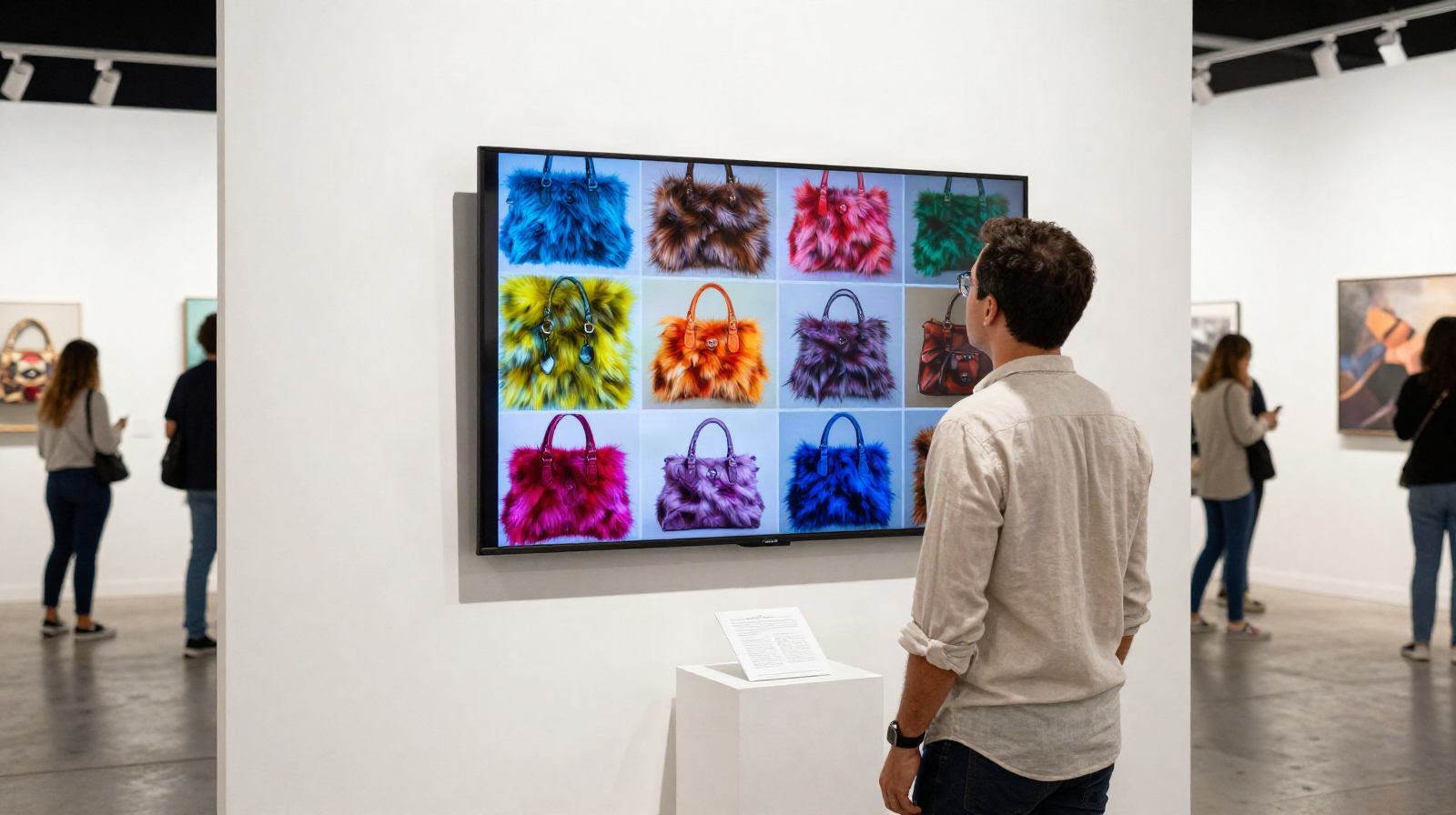
Mason Rothschild, whose legal name is Sonny Estival, released MetaBirkins in late 2021 and presented the collection at Art Basel Miami Beach on December 2, 2021. It was 100 NFTs, each linked to a digital image of a Birkin-shaped handbag covered in fur and various prints. The mint price was 0.1 ETH, roughly $450 at the time, and the collection was distributed through the commerce platform Basic.Space before trading on OpenSea.
Rothschild had done something similar before. Earlier in 2021 he and the artist Eric Ramirez released “Baby Birkin,” a single NFT showing a fetus inside a transparent Birkin, which resold for about $47,000. Nothing happened. MetaBirkins was bigger, it carried the Birkin name in the project title, and it came with a matching domain at metabirkins.com and social accounts using the same handle.
His stated reason for the project was commentary. He described it as a response to fashion’s use of fur and a push toward synthetic alternatives, and he later compared the work to Andy Warhol painting Campbell’s soup cans. Resale activity was quick. By the time OpenSea removed the collection in December 2021, reported secondary trading had reached around $1.1 million.
Why Hermès sued instead of ignoring it
Hermès holds registered trademarks in the Birkin name and asserts trade dress rights in the bag’s shape. A trademark exists to tell buyers who made a product, and the USPTO describes it as a word, phrase, design or combination that identifies goods and distinguishes them from those of others. Rights of that kind weaken when an owner lets others use the mark unchallenged, which is why large brands respond to small projects that carry their names.
The company sent a cease and desist in December 2021. OpenSea removed the collection in response, but the tokens still existed on Ethereum and turned up on other venues, including Rarible. Rothschild publicly rejected the demand and claimed his use was protected. Hermès filed suit in the Southern District of New York on January 14, 2022.
The company’s argument was narrow and practical. It said buyers were treating MetaBirkins as an official Hermès product, and it pointed to press coverage that described the NFTs as coming from the brand, plus messages from confused consumers. It also raised the domain name separately, under the federal cybersquatting statute.
Rothschild moved to dismiss on First Amendment grounds. The court denied that motion on May 5, 2022, and denied both sides’ summary judgment motions on December 30, 2022, sending the dispute to a jury.
What the jury decided
Trial began on January 30, 2023, and lasted about a week. On February 8 the jury found Rothschild liable on all three counts: trademark infringement, trademark dilution and cybersquatting. It awarded $133,000 in total damages, split as $110,000 covering his profits and resale commissions and $23,000 for the domain claim.
The jury also answered the speech question. It found that Rothschild was not shielded by the protections that normally apply to artistic works, because the MetaBirkins created a likelihood of consumer confusion and because he had intended to mislead people into thinking Hermès was involved. Evidence at trial included his own messages about the value of the Birkin association and the attention it would bring.
On June 23, 2023, Judge Jed Rakoff issued a permanent injunction. Rothschild was barred from promoting or profiting from the MetaBirkins, ordered to transfer the metabirkins.com domain to Hermès, and required to hand over any future income from the collection. The same order denied his motion for judgment as a matter of law and his request for a new trial.
Why the small damages figure is the least important part
$133,000 is not a meaningful sum for either party next to the cost of a two-week federal trial. The injunction is what changed the outcome. It ended the project as a going concern, cut off the creator royalty stream that a collection depends on, and took the domain that held the collection’s public identity. A collection that cannot be promoted, supported or monetized by the person who made it is finished regardless of what the tokens are nominally worth.
The free speech argument that almost worked
Rothschild’s defense rested on Rogers v. Grimaldi, a 1989 Second Circuit decision that shields expressive works from trademark claims unless the use has no artistic relevance to the work or explicitly misleads about its source. Under that test, a film, a song or a painting can reference a brand without permission.
Rakoff agreed Rogers applied, but he told the jury it could still find liability if Rothschild had intended to confuse the public. Rothschild’s appeal argues that instruction rewrote the test, turning a narrow question about whether a work explicitly misleads into a broad inquiry into the artist’s motives.
Four months after the verdict, the Supreme Court changed the ground underneath the argument. In Jack Daniel’s Properties v. VIP Products, decided June 8, 2023, the Court held unanimously that the Rogers test does not apply at all when a defendant uses a mark as a designation of source for its own goods. Both sides now say that ruling favors them. Hermès reads it as confirming that naming your product MetaBirkins is source identification, not commentary. Rothschild reads it as confirming that Rogers still governs genuinely expressive works, and that the jury should have been instructed accordingly.
What happened to the people who bought a MetaBirkin
The tokens were never touched. They sat in their owners’ wallets on Ethereum before the lawsuit, during the trial and after the injunction, and they remained transferable the whole time. No court ordered anyone’s NFT destroyed, and no court could have done so easily against holders who were not parties to the case.
What holders lost was everything around the token. The largest marketplace stopped listing the collection, which removes most of the buyers a niche collection has. The creator was legally prohibited from promoting it or releasing anything further. Any resale that does happen now sends royalties to Hermès rather than back into the project. The name itself became a liability instead of a draw.
That pattern is the point of the case for anyone buying. It mirrors what happened when Nike wound down RTFKT, where the Clone X tokens survived and the company behind them did not. It also shows why the distinction between the token and the rights attached to it matters, a question covered in more detail in what you actually own when you buy an NFT. A delisting is not the same as a chain-level loss, much like the difference explored in what happens if a marketplace shuts down.
Where the case stands now
Rothschild filed his notice of appeal on July 21, 2023. The Second Circuit declined to pause enforcement of the judgment while the appeal proceeded, denying that request on July 15, 2024.
The panel heard oral argument on October 23, 2024. Senior Circuit Judge Pierre Leval suggested the trial court may have instructed the jury improperly on the Rogers test, and raised the concern that affirming the verdict could limit artists who reference well known brands. Other members of the panel pressed Rothschild’s counsel on whether he had used the Birkin name to get commercial advantage rather than to comment on anything.
No decision has issued as of September 2026. If the Second Circuit affirms, the verdict stands as the template for brand enforcement against NFT projects. If it reverses and remands, the factual finding that Rothschild meant to mislead would be tested again under a different instruction, and the first NFT trademark verdict would lose much of its authority.
What to take from it before you buy or mint
For buyers, treat an unlicensed brand name in a collection’s title as a liquidity risk rather than a legal abstraction. Marketplaces act on takedown notices long before a court rules, and a collection that cannot be listed where buyers are has no working market.
For anyone minting, the useful lesson is where the line fell. Rothschild lost less on the images than on the packaging. The project name, the domain and the social handles all used the mark in the way trademark law cares about most, as a label for his own product. Commentary is a real defense, but it is a defense about how a mark is used, not a category that a work enters by being called art.
Common questions
Is it legal to make an NFT of a famous brand’s product?
Depending on how it is done, it can be. Referencing a brand inside an expressive work has protection in the US, but using the brand’s name to identify and sell your own product does not. Naming the collection, the domain and the accounts after the mark, as Rothschild did, is what moved his project onto the wrong side of that line.
Did MetaBirkins buyers lose their NFTs?
No. The tokens stayed in their wallets on Ethereum and remained transferable. The injunction bound Rothschild, not holders. What holders lost was the OpenSea listing, any further development of the project and the creator’s ability to support or promote it.
Does the Hermès verdict apply outside the United States?
Not directly. It is a US federal jury verdict interpreting the Lanham Act, so it binds nobody in the EU, UK or elsewhere. Trademark rights are territorial, and other jurisdictions weigh artistic use against brand rights differently, though large brands have brought similar claims in several of them.