Quick answer: minting an NFT means sending a blockchain transaction that creates the token for the first time and records your wallet as its first owner. Nothing is being created artistically at that moment. The image, the traits and the collection size were all decided before the mint opened, and the transaction just writes a new token ID into a smart contract and charges you for the computation. Minting is how a token enters circulation, while buying on a marketplace moves a token that already exists from one wallet to another. The ERC-721 standard that most Ethereum NFTs follow does not even define how minting works, so every project writes its own rules for price, timing and who is allowed to mint. That is why two mints can behave nothing alike, and why a failed mint attempt can still cost you money with no token to show for it.
Minting is a transaction, not a creative act
The word comes from coinage, and it is a little misleading. When you mint, you are not causing the artwork to be made. For a generative collection, the images and their trait combinations were produced long before the sale opened, usually as a fixed set of files with a fixed maximum supply. What the mint transaction creates is the token: a record inside a smart contract that says token number 4,182 belongs to your wallet address.
That record is the whole thing. ERC-721, the Ethereum standard behind most NFTs, defines how ownership is tracked and how tokens move between wallets, but the specification says outright that creating tokens (“minting”) and destroying them (“burning”) are not included in it. Contracts are free to implement those however they like. So there is no single, standard way a mint has to work. Each project’s developers decide the price, the timing, the per-wallet limit and the eligibility rules, and they encode those decisions in their own contract.
This matters more than it sounds. If you assume a mint works the way the last one you joined worked, you will get caught out.
Minting compared with buying on a marketplace
A mint is a primary sale. Your payment goes to the project, the token did not exist a second earlier, and the price is whatever the contract is programmed to charge. A marketplace purchase is a secondary sale. The token already exists, another wallet owns it, and the price is whatever that seller is asking. Our step-by-step guide to buying your first NFT covers that second route, and how marketplace fees work explains what gets skimmed off the top of it.
The bigger practical difference is information. On a marketplace you can see the exact token you are buying, its traits, its price history and whether anyone is bidding on it. At a mint you often get a random token from the remaining supply, so you are paying a known price for an unknown item. Some buyers accept that trade because mint prices are usually lower than post-launch prices for the better tokens. It cuts the other way just as often, and plenty of collections have traded below their mint price within days.
What actually happens when you press mint
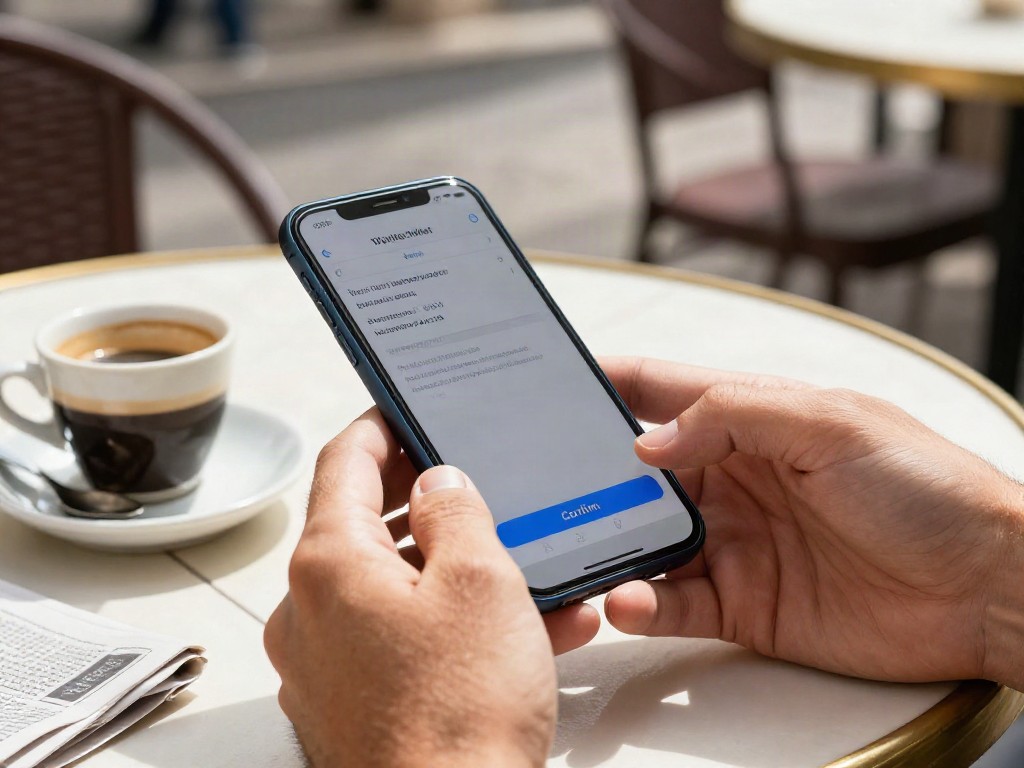
Your wallet builds a transaction addressed to the project’s contract, calling a function that is typically named something like mint or publicMint, with the payment attached as the transaction value. The contract then runs its checks: is the sale open, is there supply left, has this wallet already hit its limit, is the payment the right amount, and if there is an allowlist, does the submitted proof show this address is on it.
If every check passes, the contract assigns the next token ID, writes your address as the owner, and emits a transfer event whose sender is the zero address. That zero-address sender is the on-chain signature of a mint, and it is how block explorers and marketplaces know a token was created rather than traded. Within a few minutes the indexers behind your wallet app and the marketplaces catch up, and the token shows up in your account.
If any check fails, the transaction reverts. You get no token, and you still pay.
Why a failed mint still costs you
Validators run the computation whether or not the outcome is a success, and reverted transactions are still written into a block. As the Ethereum gas documentation describes, the fee covers that work, and under the current fee model the base-fee portion of it is burned rather than paid to anyone. Nobody can hand it back to you.
At small scale this is a few dollars of annoyance. At large scale it gets ugly. During Yuga Labs’ Otherdeed land sale in May 2022, bidders spent well over $150 million in ETH on gas, and thousands of transactions failed anyway while still charging their senders. Yuga refunded gas to wallets whose transactions failed, which is worth knowing precisely because almost no project does that. Our breakdown of the Otherside sale goes through how the contract design made it that expensive. Assume a failed mint is money gone.
The formats a mint can take
Most launches use one of a few patterns, and the pattern tells you what kind of competition you are walking into.
An allowlist mint restricts the early window to pre-approved wallet addresses. The contract usually stores a single cryptographic summary of the list rather than thousands of addresses, and your wallet submits a proof that it belongs. Allowlist windows tend to have a lower price and a strict per-wallet cap, and because the eligible set is limited, they rarely turn into fee auctions.
A public mint opens to anyone. Supply is first come, so when demand clearly exceeds supply, buyers raise their priority fees to get included sooner and the gas cost climbs for everybody.
A Dutch auction starts at a deliberately high price and steps it down at fixed intervals until the supply clears. Buyers decide when to accept the current price. This design exists to defuse gas wars by spreading demand over time, and it does that reasonably well, at the cost of making early buyers pay more than late ones.
There is also the deferred model, often called lazy minting, where a listing is prepared off-chain and the token is only written to the blockchain when someone first buys it, so the buyer covers the mint gas. It is worth knowing that this is now less common on the largest platforms than it was during the 2021 boom. OpenSea retired its lazy-minting tool for new items and its current creator guidance has creators deploy a contract and approve a mint transaction themselves, with gas payable on minting, buying, transferring and accepting offers.
Delayed reveal, and why a fresh mint can look blank
Plenty of collections ship with the artwork hidden. The contract points every token at the same placeholder file, and once the sale finishes the team switches the metadata location to the real one. That is why a token you just minted may sit in your wallet for hours as a grey square or a loading animation.
Delayed reveal is a normal anti-sniping measure, since it stops buyers from scanning the metadata mid-sale and cherry-picking rare tokens. It also means you commit before you know what you own, and it leaves you depending on the team to finish the job. If the reveal never happens, or the metadata is hosted somewhere that later goes offline, the token record survives but the image does not. That is the same storage question covered in what you actually own when you buy an NFT.

What minting costs
Two separate numbers make up your total, and only one of them belongs to the project.
The mint price is set by the contract and can be anything, including zero. Free mints are common, and they are usually funded by the secondary-market royalties the project expects afterwards.
The network fee is set by the chain, not the project, and it varies with how busy the chain is at that moment. On Ethereum mainnet during a contested launch, gas has repeatedly cost more than the mint price itself. On chains built for cheap writes it barely registers: Solana’s own figures for compressed NFTs put the cost of minting one million tokens at about 5.35 SOL, roughly $113 when that was published. Polygon and the Ethereum layer-2 networks land in a similar range of cents per mint.
Cheap minting has a consequence that buyers tend to skip past. When creating a token costs a fraction of a cent, supply is effectively unlimited, and scarcity only exists because a project chose to impose it. The cost of minting tells you nothing about what the result is worth, which is a separate question covered in how to tell what an NFT is worth.
A short check before you mint
Get the contract address from the project’s own website or its verified social account, then confirm the address your wallet is about to interact with matches it. Fake mint pages that copy a real launch are one of the most reliable ways to lose money on drop day.
Read the sale terms: total supply, how much is reserved for the team, the per-wallet cap, and which window you qualify for. Then work out the full cost including gas at current rates, rather than just the mint price.
Check whether the reveal is immediate or delayed, and find out where the metadata will be stored once it is. Check the license attached to the token too, because that varies wildly between collections and it is fixed by the project, not by you.
Last, look at what the contract asks your wallet to approve. A mint should need a single transaction that sends payment and returns a token. A request for blanket approval over tokens you already hold is not part of minting.
The bottom line
Minting is the moment a token first exists and your wallet is recorded as its owner. The artwork was already made, the standard does not dictate how the process runs, and the rules come from a contract written by the project. That contract decides what you pay, what you get and whether you get anything at all, which makes reading it, or at least reading an accurate summary of it, the actual work of minting safely.