Quick answer: A burner wallet is a separate wallet address used for one risky interaction and funded with only what that interaction needs. For NFT minting it exists so an unfamiliar contract never gets near the wallet holding your collection. The protection is real but narrow. Token approvals under the ERC-721 standard apply only to the address that granted them, so a malicious mint contract can take what sits in the burner and nothing beyond it. The benefit comes from address isolation, not from the wallet being disposable. Two mistakes cancel it out. Creating the burner as an extra account inside your existing MetaMask leaves it under the same Secret Recovery Phrase, so one leaked phrase still exposes everything. And leaving a valuable NFT in the burner after the mint turns that burner into your collection wallet by default. Use a separate recovery phrase, fund it per mint, and move anything worth keeping out the same day.
A burner wallet is the most recommended and least correctly implemented piece of NFT security advice. The idea takes one sentence to explain, which is probably why so many people end up with a setup that gives them the feeling of isolation without the isolation.
Why minting is the activity worth isolating
Buying an NFT on an established marketplace routes your transaction through a contract that has been running for years and has handled enormous volume. Minting does not. A mint often sends your money to a contract deployed hours earlier, written by someone anonymous, audited by nobody, and live for exactly as long as the drop lasts.
You also do more than send money. Minting means calling a function on that contract and letting it write to the chain on your behalf. Some mints ask for a signature as well as a transaction, and signed messages are where much of the current theft happens.
Then there is the pace. Mints run against a clock, in a Discord channel where everyone is telling each other to hurry, with a link that someone pasted ninety seconds ago. Unaudited code plus time pressure is the exact situation where careful reading breaks down. A burner wallet is a way of admitting that in advance and limiting what it can cost you.

What a burner actually protects you from
The mechanism is narrow and specific, which is useful, because it tells you exactly where the protection ends.
Approvals belong to one address
When an NFT contract gets permission to move tokens, that permission comes from a single function. The ERC-721 standard defines setApprovalForAll as enabling an operator “to manage all of msg.sender‘s assets.”
The words that matter are msg.sender. The approval covers the tokens held by the address that called the function, inside that one contract. It does not extend to any other address you control. It does not extend to other contracts either.
So when you mint from a burner and the contract turns out to be hostile, the attacker gets what the burner holds. Your main wallet granted nothing, so there is nothing to exercise against it. That scoping is the entire benefit, and it is enough to turn a catastrophic loss into an annoying one.
A fresh address has nothing to take
The second half of the protection is simply that a new address is empty. No collection sitting in it, and no accumulated approvals from sites you connected to months ago. Every wallet you use for a year quietly builds up a list of contracts allowed to move your assets, which is why revoking old NFT approvals is worth doing periodically. A burner never builds that list because you retire it before it can.
The cost of getting this wrong on a main wallet is well documented. In January 2023 Kevin Rose, co-founder of the Moonbirds collection, signed a malicious message that let an attacker bulk transfer tokens out of his wallet. The Block reported losses of at least 684.7 ETH, worth more than $1.1 million at the time, including an Autoglyph and 25 Art Blocks pieces. One approval, one wallet, an entire collection.
What a burner does not protect you from
A shared recovery phrase
This is the mistake that quietly voids the whole arrangement. Clicking “Add account” in MetaMask does not create an independent wallet. It derives another address from the recovery phrase you already have. MetaMask’s own documentation is direct about the consequence: “if you have your SRP, you have access to all your accounts derived from that SRP,” while a single account’s private key opens only that one account. The help center spells this out alongside the instructions for adding accounts.
For phishing that works through approvals, derived accounts are still fine, because approvals stay address-scoped no matter how the addresses were generated. For anything that captures the recovery phrase itself, such as a fake wallet-restore page or a malicious browser extension, they are worthless. One phrase leaks and every account under it goes at once.
If you want real separation, the burner needs its own recovery phrase. MetaMask supports holding more than one phrase in the same installation and lets you choose which one a new account derives from. A separate browser profile with a second extension install works too, and has the side benefit of keeping your main wallet from auto-connecting to a mint site by accident.
Anything you decide to leave in it
A burner stops being a burner the moment it holds something you would miss.
How to set one up
- Create the wallet with its own recovery phrase, not as an extra account under your existing one. Write the phrase down and store it like any other, because you will need it if a mint succeeds and you have to move the token out.
- Fund it per mint. Send the mint price plus gas, a little headroom for a failed transaction, and no more. Topping it up for each drop takes thirty seconds and caps your exposure at the amount you sent.
- Connect it to nothing except the mint site. Portfolio trackers and airdrop checkers can wait for a wallet that matters.
- Mint, then check what you received on a block explorer before you do anything else.
Emptying it is the step people skip
The burner did its job at the moment the mint cleared. From there on it is an unaudited-contract-facing wallet holding an asset, which is the situation you built it to avoid.
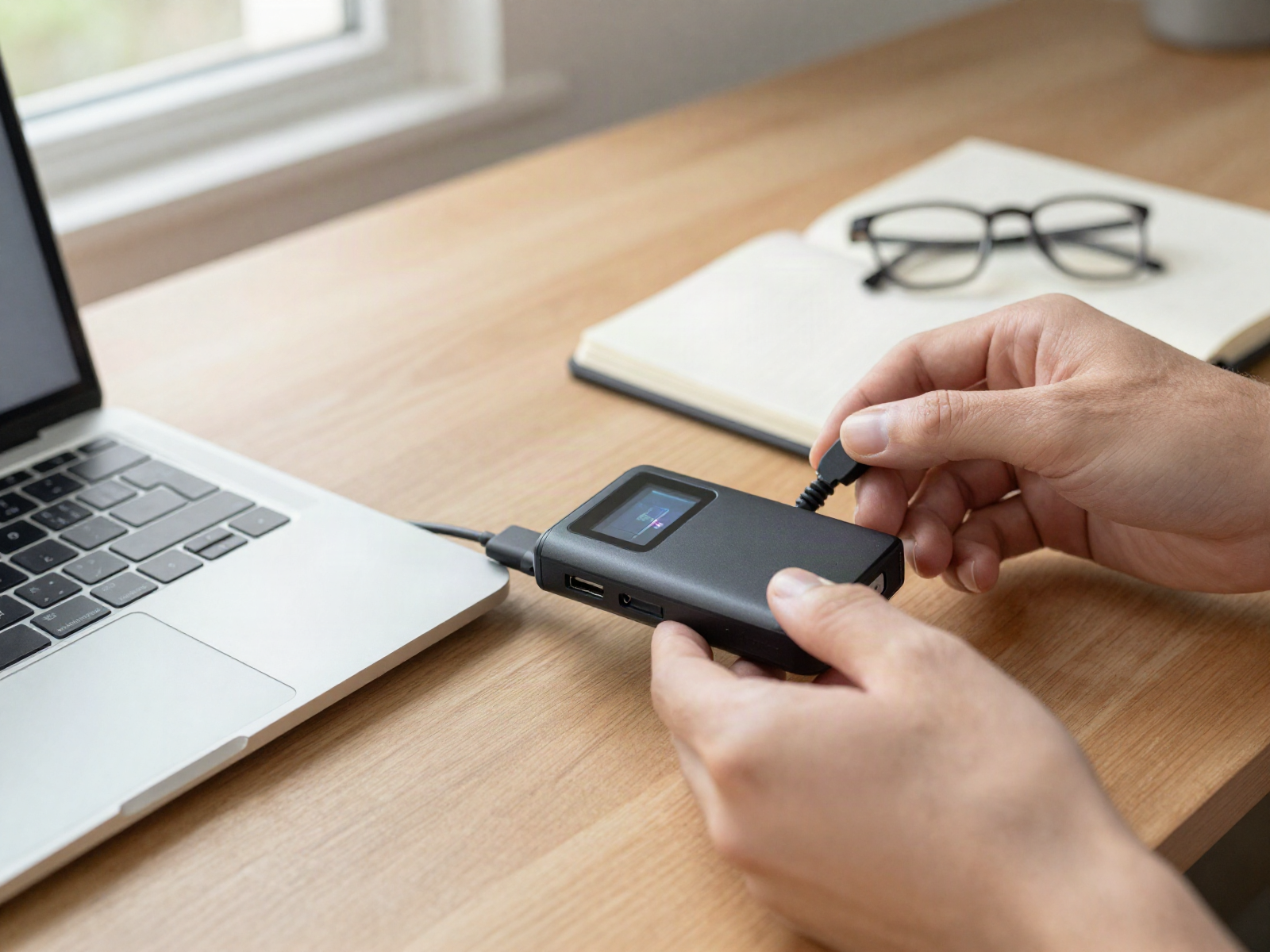
Move the token out the same day. Send it to whichever wallet you use for holding, ideally one secured by hardware so that approving a transfer requires physical confirmation on the device. If you are still deciding between setups, the tradeoffs are covered in our comparison of hardware and software wallets.
Two details make the transfer safer. Verify the destination address by reading the first and last five characters off the receiving wallet itself rather than from your clipboard, and send one test transaction of something worthless first if the amount justifies the extra gas. Once the NFT has moved, leave the burner empty. An empty wallet with stale approvals attached to it is harmless.
When a burner is not worth the trouble
Overhead is real, and there are cases where it buys you little.
Buying a listed NFT on an established marketplace is not a mint. You are interacting with a contract that has been examined by a very large number of people, and the transaction is a purchase rather than a permission grant. A burner adds steps without removing much risk.
Free claims and airdrop pages, on the other hand, are worth a burner even though no money is involved, because “claim” pages are a standard drainer front and the transaction they actually request is often an approval.
And if the mint price is genuinely trivial to you, a burner may not be worth the friction. Just be honest about which wallet is connected while you decide, because the gap between “this is a small mint” and “my main wallet is connected to a contract I have not read” is where losses come from.
Common questions
Is a burner wallet the same as a hot wallet?
No. A hot wallet is any wallet whose keys live on an internet-connected device, which includes most browser and mobile wallets regardless of how you use them. A burner is defined by how you use it, which is one purpose with minimal funds and then retirement. Most burners are hot wallets, but a hot wallet holding your collection is not a burner.
Do I need a new burner for every mint?
Not necessarily. One burner reused across mints is much better than no burner, since its balance stays near zero and your main wallet is never connected. A fresh address per mint is stricter, and makes sense when the drop is large or the team is unknown. The practice that matters more than either is emptying it afterwards.
Can I use a hardware wallet as a burner?
You can, and some collectors keep a cheap second device for this. The upside is that every mint approval needs a physical button press, which stops a background script from acting without you. The downside is that the friction slows you down during a timed mint, and a hardware wallet does not protect you from approving a malicious transaction yourself. Confirming on the device is not the same as reading what you confirmed.
How much should I keep in a burner?
The mint cost plus gas, plus a small buffer for one failed attempt. The number should be one you would be irritated to lose and not affected by losing. If you are hesitating over the amount, it is too high.
The short version
A burner wallet works because approvals are scoped to an address, so isolating the address isolates the damage. It stops working the moment the burner shares a recovery phrase with your real wallet or starts holding something you care about. Separate phrase, minimal funds, empty it the same day. Wallet drainer phishing still took $83.85 million from around 106,000 victims during 2025 according to Scam Sniffer, down sharply from the year before but far from over. A burner does not make you harder to target. It makes being targeted cheaper.
Leave a Reply